
By Attorney Martin Schmidt – July 10, 2025
Today any survivors of child sexual abuse involving any Juvenile Detention Center in San Diego County has a few options for reporting the assault. If you or someone you know is the victim of sexual assault while incarcerated, you can contact the San Diego County office of Child & Adult Protective Services Hotline: 800-339-4661.
Your next step is to contact our team of child abuse lawyers at the Schmidt National Law Group that can walk you through the legal process to file an abuse claim against any Juvenile Detention Center in San Diego County. Use the 100% Secure Claim Form below, or contact us at 1-800-631-5656.
Numerous lawsuits have been filed against San Diego County regarding serious allegations of sexual abuse and negligence at its juvenile detention facilities. The affected centers include the Kearny Mesa Juvenile Detention Facility, East Mesa Juvenile Detention Facility, Camp Barrett, the Girls Rehabilitation Facility, and the Juvenile Ranch Facility. The A.B. and Jessie Polinsky Children’s Center has also faced similar troubling allegations, raising significant concerns about the treatment of minors in these institutions.
What Qualifies as a Juvenile Detention Abuse Case?
Who May Qualify:
You may be eligible to file a claim if:
- You were sexually abused, assaulted, or harassed while in a California juvenile detention facility.
- The abuse was perpetrated by staff, guards, counselors, or other detainees.
- The facility failed to protect you, ignored complaints, or attempted to cover up the abuse.
- You experienced emotional, psychological, or physical harm as a result
Facilities Commonly Involved:
Survivors have reported abuse in various California juvenile detention centers, including:
- Kearny Mesa Juvenile Detention Facility (San Diego)
- San Bernardino Juvenile Hall
- Los Padrinos Juvenile Hall
- Central Juvenile Hall
- MacLaren Children’s Center
Types of Abuse Reported:
- Sexual assault or molestation
- Physical abuse or excessive force
- Verbal threats or psychological abuse
- Neglect or failure to provide medical care
- Solitary confinement or improper restraints
Evidence That Can Support Your Case:
- Medical records or psychological evaluations
- Witness statements or affidavits
- Incident reports or facility records
- Photographs or physical evidence
- Personal journals or correspondence
Key Allegations:
Sexual Abuse: Multiple lawsuits detail disturbing patterns of sexual abuse perpetrated against minors by authority figures, including probation officers and facility staff members. These allegations span over five decades, from 1970 to 2022, with some reported incidents occurring as recently as 2023. The scope and duration of these allegations suggest a deeply concerning pattern of abuse within the juvenile detention system.
Systemic Failure: The legal complaints highlight fundamental institutional failures in protecting vulnerable youth. The lawsuits specifically point to critical deficiencies in the facilities’ operations, including severely limited oversight of staff-youth interactions, inadequate screening processes during staff hiring, and insufficient training programs for personnel. These systemic shortcomings allegedly created an environment where abuse could occur and persist without detection or intervention.
Culture of Silence: The lawsuits describe a deeply troubling environment within these facilities where victims were systematically silenced through various forms of intimidation. According to the allegations, young detainees faced serious threats if they attempted to report abuse or refused to comply with their abusers. These threats included physical violence, death threats, and the possibility of extended detention periods, effectively creating a culture of fear and compliance.
Wrongful Death: Two particularly tragic cases have resulted in substantial settlements. In one instance, San Diego County agreed to pay $1.1 million following the death of a 16-year-old who succumbed to a drug overdose while in custody. The lawsuit alleged that the facility failed to implement adequate measures to prevent drug access and properly monitor the teenager’s condition. In another devastating case, the county reached a $1 million settlement with the family of a 16-year-old girl who died by suicide at the Kearny Mesa facility. The legal action claimed that understaffing and failure to address the girl’s documented suicidal ideation directly contributed to her death.
Recent News from San Diego Shines Light on Abuse at the Polinsky Children’s Center Centers in San Diego.
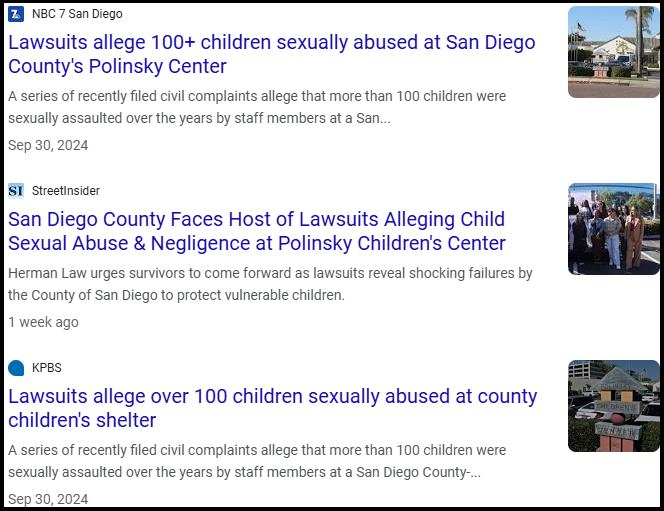
The news broke last year in September that over 100 lawsuits have been filed against the Polinsky Children’s Center in San Diego, alleging decades of sexual abuse by staff members. These lawsuits, brought forward by multiple law firms, claim systemic negligence and institutional failure to protect vulnerable children housed at the facility. The abuse reportedly occurred between the early 1990s and 2023, involving children aged 2 to 17.
Recent updates indicate that at least 50 additional lawsuits were filed in April 2025, further highlighting the ongoing legal battle against the center and San Diego County. In total, more than two dozen lawsuits had already been filed in previous years, with allegations ranging from groping and molestation to repeated sexual assaults
The Polinsky Children’s Center and San Diego County have largely refrained from commenting on the lawsuits, citing policies against discussing pending litigation. A county spokesperson previously stated that the county does not comment on legal matters currently in court.
Are you a survivor of Juvenile Detention Facility Abuse in San Diego County?
San Diego Juvenile Detention Facility Abuse
Filing and Screening Reports of Child Abuse and Neglect in San Diego County.
Steps for San Diego Child Sex Abuse Survivors to Take
1. Consult with our Experienced Attorneys
The first step for survivors seeking justice is to consult with our team of experienced attorneys who specializes in child sexual abuse cases. We will be able to help you navigate the complex legal process and provide guidance on the best course of action. We keep all of your information private, we understand the pain and suffering that took place. By taking action against these San Diego County Juvenile Detention Facilities, you’ll help others avoid the abuse that took place.
2. Gather Documentation and Evidence
Survivors should gather any documentation and evidence they have related to the abuse, including medical records, therapy notes, and any written or recorded statements from the abuser or witnesses. This evidence will be crucial in building a strong case against the state.
3. File an Abuse Claim against the San Diego County Juvenile Detention Facility
Once the evidence is gathered, the next step is to file a claim against the San Diego County Juvenile Detention Facility. This may involve filing a lawsuit or submitting a claim through the settlement fund, depending on the survivor’s individual circumstances and preferences.
4. Work with our Attorneys throughout the Legal Process
Survivors should maintain open communication with the Schmidt National Law Group throughout the legal process, providing any additional information or documentation as needed. This will help ensure that their case is as strong as possible. Contact us at 1-800-631-5656 for a 100% free case evaluation.
5. Seek Emotional Support and Healing
Finally, it is essential for survivors to seek emotional support and healing throughout the legal process. This may involve therapy, support groups, or connecting with other survivors. The road to justice and closure can be long and challenging, but the support of others can make all the difference.
Most Common Questions Related to Juvenile Probation Camp Abuse Lawsuits
Take Action Now.
Understanding the Statute of Limitations in California:
California has specific laws that determine the time frame within which survivors of juvenile detention abuse can file a lawsuit.
For Abuse Occurring On or After January 1, 2024:
- There is no statute of limitations. Survivors can file a lawsuit at any time.
For Abuse Occurring Before January 1, 2024:
- Survivors have until their 40th birthday to file a claim.
- Alternatively, they have 5 years from the date they discover that the abuse caused them psychological injury or illness.
Importance of Timely Action:
Even with extended or eliminated deadlines, it’s essential to act promptly:
- Evidence can deteriorate or be lost over time.
- Witnesses’ memories may fade.
- Legal processes can be lengthy; starting early can lead to swifter resolutions.
Steps to Take:
- Consult an Attorney: Seek legal advice to understand your rights and the viability of your case.
- Gather Documentation: Collect any records, reports, or evidence related to the abuse.
- File a Claim: Your attorney will guide you through the process of filing a lawsuit against the responsible parties.
Since the Schmidt National Law Group is based in San Diego, we act fast to take action against these problematic operations and to unsure you are compensated and made whole again.
As the California’s statute of limitations has been extended, it is imperative that survivors take action now to secure the justice, compensation, and closure they deserve.
By consulting with our experienced sex abuse attorneys, gathering evidence, and seeking emotional support, survivors can navigate the complex legal landscape and ensure their voices are heard.
If you or someone you love is a survivor of abuse in any San Diego County Juvenile Detention Facility, we encourage you to take action now, we intend to hold them responsible for the pain and suffering that occurred at their facilities. Use the 100% Secure intake form above, or call us direct at 1-800-631-5656.
Sources:
Page: Reporting San Diego County Juvenile Detention Abuse Updated on July 10, 2025.