
A crisis at Texas Juvenile Detention Centers has come under the spot light from members of a Texas legislative panel of the states Juvenile Justice Department on March 4, 2025 accusing the agency of dismissing a 72-page federal report alleging widespread abuse and unconstitutional conditions at all five of Texas’ juvenile detention facilities.
The findings could open the door for sexual abuse survivors to come forth with juvenile detention lawsuits to hold those facilities responsible for sexual abuse. Currently Texas State laws are being closely looked at and statutes of limitations may be changing – meaning survivors of sexual abuse have more time to seek justice.
Vice chair Gene Wu of the House Criminal Jurisprudence Committee brought up the August 2024 U.S. Department of Justice report that identified a “pervasive atmosphere of sexual abuse” in Texas’ youth prisons. The report stems from a federal investigation that began in October 2021 following allegations of unconstitutional conditions in the facilities, which house approximately 720 youth. The U.S. Department of Justice found that children in Texas’ juvenile prisons were subject to excessive force, sexual abuse and prolonged isolation. It also documented excessive use of pepper spray, a “dysfunctional grievance system” and a lack of structured programming among other findings.
The report goes on to state:
“Children in TJJD’s secure facilities are exposed to conditions that cause serious and lasting physical, mental, and emotional harm.” “At the same time, they are denied treatment and services they need to cope with their environment, earn release, return to their communities, and become productive citizens.”
The United States Attorney’s Office, Southern District of Texas issued a press release on August 1, 2024.
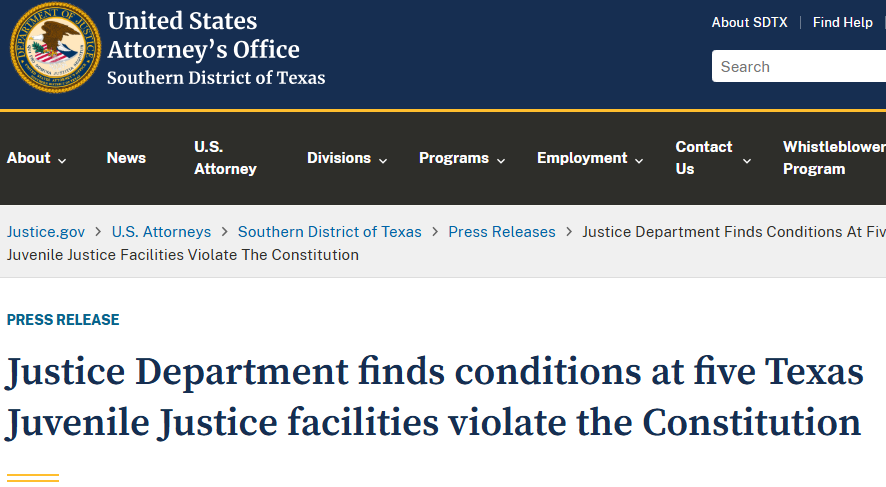
HOUSTON – The Justice Department has announced its findings that the Texas Juvenile Justice Department (TJJD) is violating the U.S. Constitution, as well as the Individuals with Disabilities Education Act (IDEA) and the Americans with Disabilities Act (ADA).
These violations of the Constitution and federal law place children at substantial risk of serious physical and psychological harm and impede successful outcomes for children.
“The conditions in the facilities are unacceptable,” said U.S. Attorney Alamdar S. Hamdani for the Southern District of Texas. “Our investigation found that children in these facilities face sexual abuse by staff and other children. Tragically, this is not the first investigation into allegations of sexual abuse at TJJD facilities. Since the early 2000s, other investigations by Texas state agencies and the Texas Rangers substantiated sexual abuse allegations of the children at TJJD facilities, yet this horrifying problem persists. Working with Texas’s other U.S. Attorneys’ Offices, the Civil Rights Division and the State of Texas, my office hopes to provide protections to the vulnerable and help right wrongs that have existed for far too long.”
Examples of Alleged Abuse Exhibited in Texas Juvenile Detention Centers
- Coercion or Threats: Attempting / Forcing a detainee to engage in sexual activities against their will.
- Exhibitionism & Voyeurism Involving Minors: Forcing a minor to observe sexual acts or exposing oneself to a minor.
- Exploitation: Taking advantage of a detainee’s vulnerability for sexual activities.
- Grooming: Actions from Adults aimed at gaining a child’s trust for sexual manipulation.
- Inappropriate Relationships: Romantic or sexual relationships between staff and minor detainees.
- Indecent Exposure to Minors: Engaging in indecent exposure in front of a minor.
- Sexual Assault and Rape: Sexual intercourse or penetration with a minor.
- Sexual Contact: Touching or physical contact of a sexual nature, even without penetration.
- Sexual Harassment: Unwelcome sexual advances, comments, or requests for sexual favors that create an intimidating environment.
Locations and Names of Juvenile Detention Centers in Texas
- Gainesville State School, Gainesville
- Gardner-Betts Juvenile Justice Center
- Giddings State School, Giddings
- Evins Regional Juvenile Center
- McLennan County State Juvenile Correctional Facility
- McLennan Residential Treatment Center
- Ron Jackson State Juvenile Correctional Complex
- Ayres House
- Edna Tamayo House
- Schaeffer House
- Willoughby House
- Bexar County Juvenile Detention Center
- John R. Roach Juvenile Detention Center
- Dr. Jerome Mcneil Jr. Detention Center
- Denton County Juvenile Detention Center
- Garza County Regional Juvenile Center
- Harris County Juvenile Justice Center
- Hays County Juvenile Pre-Detention Center
- Lynn W. Ross Juvenile Detention Center
- Lubbock County Juvenile Justice Center
- Solomon Casseb Jr. Webb County Youth Village
Were you a Survivor of Sexual Abuse in a Texas Juvenile Detention Center? Take Action Now.
1. Consult with our Experienced Attorneys
The first step for survivors seeking justice is to consult with our team of experienced attorneys who specializes in Texas Juvenile Detention Center sexual abuse cases. We will be able to help you navigate the complex legal process and provide guidance on the best course of action. We keep all of your information private, we understand the pain and suffering that took place. By taking action against these Texas Juvenile Detention Centers, you’ll help others avoid the abuse that took place.
2. Gather Documentation and Evidence
Survivors should gather any documentation and evidence they have related to the abuse, including medical records, therapy notes, and any written or recorded statements from the abuser or witnesses. This evidence will be crucial in building a strong case against the state.
3. File an Abuse Claim against the Texas Juvenile Detention Center
Once the evidence is gathered, the next step is to file a claim against the JDC in Texas. This may involve filing a lawsuit or submitting a claim through the settlement fund, depending on the survivor’s individual circumstances and preferences.
4. Work with the Attorney throughout the Legal Process
Survivors should maintain open communication with our law firm throughout the legal process, providing any additional information or documentation as needed. This will help ensure that their case is as strong as possible.
5. Seek Emotional Support and Healing
Finally, it is essential for survivors to seek emotional support and healing throughout the legal process. This may involve therapy, support groups, or connecting with other survivors. The road to justice and closure can be long and challenging, but the support of others can make all the difference.
Texas Juvenile Detention Center Abuse Claim Form
Were you abused at a Texas Juvenile Detention Center?
Take Action Now.
The sexual abuse allegations at the Texas Juvenile Detention Centers has shed light on a dark chapter in the states history. It’s not new problem and we will take legal actions against any of the states juvenile detention facilities.

As the Texas statute of limitations looks to be extended, it is imperative that survivors take action now to secure the justice, compensation, and closure they deserve.
By consulting with our experienced sex abuse attorneys, gathering evidence, and seeking emotional support, survivors can navigate the complex legal landscape and ensure their voices are heard.
If you or someone you love is a survivor of abuse in any juvenile detention centers in Texas, we encourage you to take action now, we intend to hold them responsible for the pain and suffering that occurred at their facilities. Use the 100% Secure intake form above, or call us direct at 1-800-631-5656.
Sources:
https://www.texastribune.org/2025/03/04/texas-juvenile-justice-department-report
Page: Texas Juvenile Detention Centers Lawsuit Claims & Settlements updated on March 11, 2025.