- Need immediate help?
- 1 (800)-631-5656
- help@nationalinjuryadvocates.com

Depo-Provera Brain Tumor Lawsuit & Settlements

Sex Abuse Lawsuits Against Mormon Church – LDS Abuse Investigation
July 16, 2024
Dr. Fabio Ortega: The Lawsuit That Shook Chicago
September 20, 2024
Depo-Provera, a widely used birth control injection, has come under scrutiny due to potential serious side effects. Recent legal action has brought attention to the link between this contraceptive and meningioma (a type of brain tumor) sparking concern among users.
The active ingredient, medroxyprogesterone, has been associated with various health issues, leading to a surge in Depo-Provera lawsuit claims across the United States.
BREAKING: September 20, 2024 — The Schmidt National Law Group is now accepting Depo-Provera Lawsuit Claims in Canada. “This class action represents a pivotal moment for Canadian women who have been affected by Depo-Provera,” said Martin Schmidt, lead attorney at Schmidt National Law Group. “We’re committed to holding pharmaceutical companies accountable and ensuring that patients receive full disclosure about the medications they’re prescribed.”
If you are a Canadian woman affected by the Depo-Provera birth control injection, please contact the law firm of Rice Harbut Elliott, 980 Howe St #820, Vancouver, BC V6Z 0C8, Canada. Phone: +1 604-682-3771
This blog post delves into the risks of Depo-Provera and its connection to meningioma, a condition that mimics brain tumor symptoms.
Recent research has shed light on a concerning link between the use of Depo-Provera, a popular injectable contraceptive, and the development of meningiomas – slow-growing tumors that form on the protective layers of the brain and spinal cord.
We’ll explore the legal landscape surrounding these cases, discussing ongoing lawsuits and potential class action claims and settlements.
Understanding Depo-Provera and Its Risks
What is Depo-Provera?
Introduced in 1992 Depo-Provera is a widely used birth control injection that has gained popularity due to its effectiveness and convenience. The active ingredient in this contraceptive is medroxyprogesterone, a synthetic form of the hormone progesterone. It’s administered as an intramuscular injection every three months, making it a long-acting reversible contraceptive option for many women.
How does it work?
Depo-Provera works by suppressing ovulation, thickening cervical mucus, and altering the uterine lining. These combined effects make it highly effective in preventing pregnancy. The injection releases a steady dose of medroxyprogesterone into the bloodstream, maintaining contraceptive protection for approximately 12 weeks.
Potential Depo-Provera side effects
While Depo-Provera has proven to be an effective birth control method, it’s not without risks. Recent studies have brought attention to potentially serious side effects, including those mimicking brain tumor symptoms. Some of the reported side effects include:
- Moderate to severe headaches
- Migraines
- Neck, shoulder, or back pain
- Nausea and dizziness
- Vision problems, including blurred or double vision
- Short-term memory loss
- Light sensitivity
- Ringing in the ears
Of particular concern is the potential link between Depo-Provera and meningioma.
A groundbreaking study published in the British Medical Journal found that prolonged use of Depo-Provera, particularly for periods exceeding six months, significantly increased the risk of meningioma in women.
This discovery has profound clinical implications, prompting healthcare providers to reassess the long-term use of this contraceptive method. While Depo-Provera remains an effective birth control option, these findings underscore the importance of regular monitoring and informed decision-making in reproductive health.
Meningioma: A Serious Complication
Definition and symptoms
Meningioma is a condition that can silently develop in the protective layers surrounding your brain and spinal cord; it often goes unnoticed until it grows large enough to cause symptoms.
Meningioma Side Effects may include:
– Headaches that worsen over time
– Unexplained changes in vision or hearing
– Subtle personality shifts
– Seizures or weakness in limbs
Fortunately, modern medical imaging, particularly MRI scans, has revolutionized the diagnosis of meningiomas, allowing doctors to spot these growths before they become life-altering. If you’re experiencing persistent, unexplained neurological symptoms, don’t hesitate to reach out to your healthcare provider. Early detection can make all the difference in managing this condition effectively and preserving your quality of life.
FDA Issues Black Box Warning for Depo-Provera (The highest FDA public warning)
The FDA first approved Depo-Provera (medroxyprogesterone acetate) in 1959 for intramuscular use. However, the FDA approved it for contraceptive use in 1992 on the condition that the manufacturer would conduct a post-approval study on the risk of osteoporosis. In 2004, the FDA revised the drug’s labeling to include a Black Box Warning about the risk of osteoporosis. The warning states that prolonged use of Depo-Provera may cause a significant loss of bone mineral density (BMD), and that the loss may not be reversible after stopping the drug.
In 2004 the FDA informed Pfizer Inc that it would have to include a “Black Box Warning” label to it’s packaging. This is strongest level warning from the FDA. The following is the actual warning label.
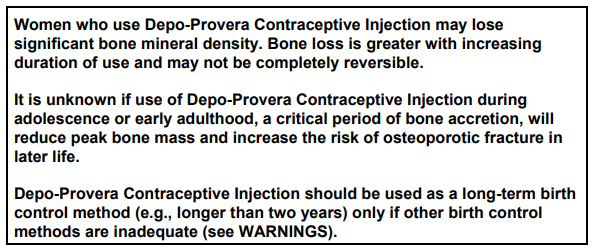
These findings have led to heightened scrutiny of Depo-Provera and its potential side effects. If you’ve experienced any neurological side effects after being injected with Depo-Provera, it’s crucial to seek immediate medical attention to obtain an accurate diagnosis.
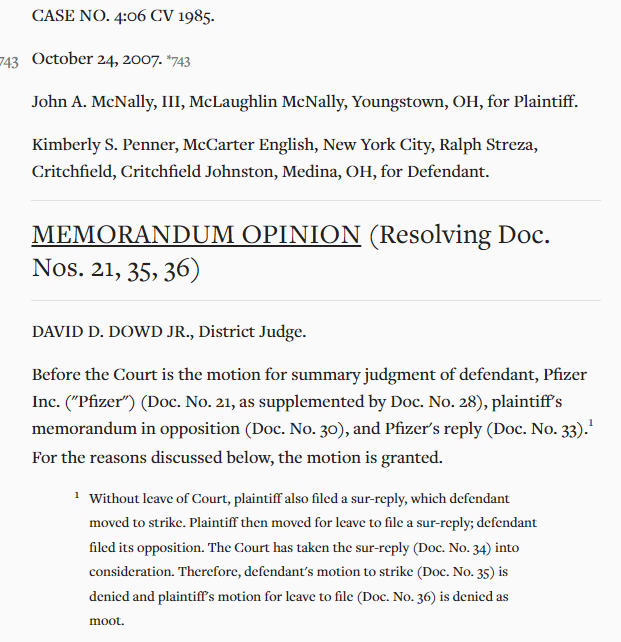
The growing body of evidence linking Depo-Provera to meningioma has resulted in numerous legal actions against Pfizer, the manufacturer of the contraceptive. Many patients have filed product liability lawsuits, alleging that the company was aware of the risks but failed to adequately warn patients and healthcare providers. Some lawsuits also claim that Pfizer didn’t conduct sufficient testing before marketing the drug to the public.
Legal Action: Depo-Provera Lawsuits
The increasing concerns surrounding Depo-Provera’s potential side effects have led to a surge in legal actions against Pfizer, the manufacturer of this contraceptive injection. Many patients have stepped forward to file claims, citing serious health complications allegedly linked to the use of this birth control method.
Claims against Pfizer
The product liability lawsuits filed against Pfizer make several significant allegations:
- Failure to warn: Plaintiffs claim that Pfizer was aware of the inherent risks associated with Depo-Provera but failed to adequately warn patients and healthcare providers about these potential dangers.
- Insufficient testing: Some lawsuits allege that Pfizer did not conduct thorough testing of the medication before marketing it to the public.
- Negligence: Claimants argue that Pfizer’s actions or lack thereof constitute negligence in ensuring the safety of their product.
These lawsuits aim to hold Pfizer accountable for the alleged harm caused by Depo-Provera and to seek compensation for the injuries sustained by patients.
Multidistrict litigation for Pfizer
Recently, the majority of claims against Pfizer in the Depo-Provera lawsuit have been consolidated under multidistrict litigation (MDL). This legal process has several important implications:
- Consolidation: Similar cases are brought before a single judge, streamlining the pretrial processes and ensuring consistency in rulings.
- Expedited proceedings: MDL helps to speed up evidence discovery and other pretrial procedures, potentially leading to faster resolutions.
- Individual representation: Each claimant retains their own legal counsel, and their case will be tried separately.
- Personalized settlements: Any settlement offers or jury awards will be based on the specific injuries that each claimant sustained, rather than a portion of a large amount as is common in class action lawsuits.
This approach to litigation allows for a more efficient handling of the numerous claims while still preserving the individual nature of each case. As the legal proceedings continue, more information about the potential risks of Depo-Provera and Pfizer’s role in addressing these risks may come to light.
Get informed on any birth control methods
The Depo-Provera lawsuits have shed light on the potential risks associated with this widely used contraceptive injection. The alleged link between Depo-Provera and meningioma has raised significant concerns about women’s health and the importance of informed decision-making when choosing birth control methods. As legal proceedings continue, it’s crucial for patients to stay informed about the potential side effects and to have open discussions with their healthcare providers about contraceptive options.
The consolidation of claims under multidistrict litigation may lead to a more efficient handling of these cases, potentially resulting in faster resolutions for affected individuals. If you or a loved one experienced negative side effects after using Depo-Provera, you might be entitled to financial compensation.
Depo-Provera Brain Tumor Evaluation
Depo-Provera Brain Tumor Evaluation Claim Form
To see if you qualify for a Depo-Provera claim, call the experienced attorneys at Schmidt National Law Group at 1-800-631-5656. As research progresses and legal actions unfold, it’s essential to prioritize patient safety and transparency in the development and marketing of contraceptive products.
Sources:
https://casetext.com/case/lorenzi-v-pfizer-inc
https://pubmed.ncbi.nlm.nih.gov/24640465
Depo-Provera Brain Tumor Lawsuit & Settlements page updated on January 10, 2025