

In the competitive world of law firms, attracting the right clients at the right time is crucial for success. One effective way to achieve this is through lead generation, where attorneys pay for leads from their ideal clients. However, implementing a successful pay-per-lead model in the legal industry comes with its own set of challenges.
The Potential of Pay-Per-Lead Models
Pay-per-lead models offer the potential for attorneys to connect with clients who are actively seeking legal services. By receiving leads at the right time – when clients are initiating their search for an attorney and when attorneys are ready to take on new cases – both parties can benefit.
In the legal industry, pay-per-lead models typically involve clients leaving messages or filling out questionnaires to provide important information about their case. Some models, such as Google’s Local Service Ads (LSA), even allow clients to contact attorneys directly through phone calls or messages.
Filtering Out Bad Leads and Unqualified Attorneys
To make pay-per-lead systems effective, it is crucial to filter out bad leads and ensure that only qualified attorneys receive the leads. This requires a sophisticated system that can accurately assess the quality of leads and the qualifications of attorneys.
However, developing such a system is complicated by the fact that different practice areas have varying requirements. Each type of legal problem requires a unique set of skills and expertise, making it challenging to create a one-size-fits-all solution.
Obstacles, Bar Regulations and Fines
Implementing a pay-per-lead system in the legal industry is further complicated by the need to maintain client confidentiality and navigate the complex maze of bar regulations for attorney advertisements. Each state has its own set of rules and regulations that govern attorney advertising, making it difficult for a pay-per-lead model to comply with all the requirements.
Over the years, many pay-per-lead providers have faced objections from state bar regulatory entities and have struggled to meet their demands. Adhering to the strict rules and regulations set by these entities can be a significant barrier to implementing an effective pay-per-lead model for law firms.
One recent example of breaking the legal marketing rules is the case of Maryland-based Principal Law Group LLC and Florida-based Levin Papantonio Rafferty. Both firms were accused of illegally soliciting clients under the Telephone Consumer Protection Act for Camp Lejeune toxic water contamination lawsuits.
A federal judge on the case stated:
“At this stage of litigation, plaintiff has provided sufficient facts for this court to reasonably infer that Principal Law is directly responsible for the telemarketing calls or that the calls were made by a vendor under Principal Law’s control,” Judge Bailey penned in his order Tuesday.
“Based on a review of the pleadings and briefing in this case, the allegations made by the plaintiff plausibly connect Principal Law to the alleged calls and therefore are sufficient to state a claim under the TCPA.”
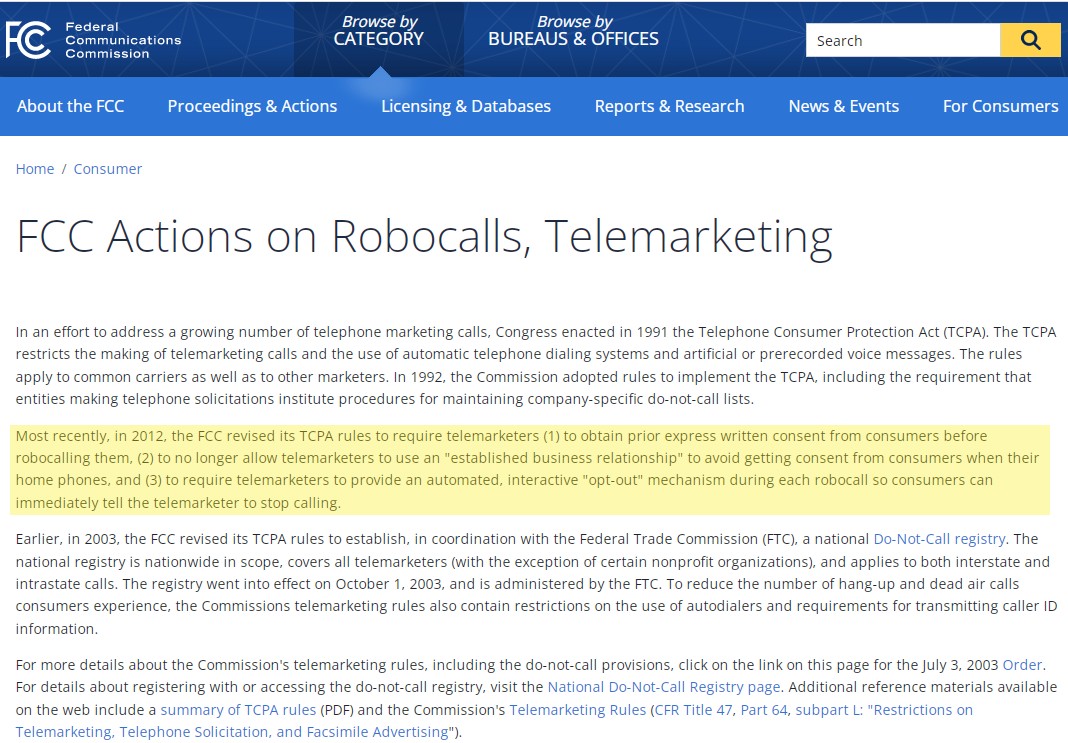
TCPA fines are expensive, with a range between $500 and $1500 per individual violation. A consumer providing sufficient documentation can recover up to $500 for each violation of the National Do Not Call Registry.
Pay-Per-Lead Advertising Services for Law Firms
Despite these numerous challenges, the Schmidt National Law Group pays attention to pay-per-lead advertising services for law firms anywhere in United States. We take pride and strive to understand the specific requirements of different jurisdictions and comply with the bar rules in each area.
By staying informed about the evolving landscape of pay-per-lead advertising for law firms, the Schmidt National Law Group aims to provide effective and compliant solutions for attorneys seeking to generate leads.
Ethical Considerations in Attorney Advertising
Attorney advertising plays a crucial role in attracting clients and promoting legal services. However, it is essential to adhere to ethical guidelines to ensure that advertising is honest, transparent, and does not mislead or deceive the public. This article explores the key issues surrounding attorney advertising and the rules that govern it.
Current Rules and New Developments
In California, attorney advertising is primarily governed by Rule 1-400 of the California Rules of Professional Conduct. However, a new set of rules, including Rules 7.1, 7.2, 7.3, 7.4, and 7.5, will come into effect on November 1, 2018, following approval by the California Supreme Court.
Both the current and new rules emphasize the importance of honesty and transparency in attorney advertising. They aim to ensure that advertisements and solicitations are truthful, clearly identifiable as such, and do not mislead or create undue pressure on potential clients.
Requirements for Written Advertising
When advertising in writing, such as in print advertisements, several requirements must be met to comply with the Rules of Professional Conduct. The advertisement must clearly state that it is an advertisement or solicitation. At least one attorney’s name responsible for the advertisement must be identified, even if a firm is mentioned. Additionally, any statements guaranteeing or warranting a particular result are considered presumptive violations.
The focus of the rules is to ensure that communications are truthful and not misleading. This includes avoiding deceptive statements or omissions that may lead to a reasonable person forming an unjustified expectation about the lawyer or their services.
Testimonials and Achievements
Both the current and new rules address the use of testimonials and attorney achievements in advertising. Testimonials or endorsements must include an express disclaimer that they do not constitute a guarantee or prediction of results. Even truthful statements regarding achievements on behalf of clients or former clients can be deemed misleading if they create unjustified expectations.
While disclaimers are not explicitly required for achievements, they often help to avoid creating unjustified expectations.
The Importance of Compliance
As the rules surrounding attorney advertising continue to evolve, it is crucial for law firms to stay informed and ensure compliance. Whether through professional websites, social media platforms, or other forms of advertising, attorneys must ensure that their communications are truthful, transparent, and do not mislead or deceive the public.
By adhering to ethical guidelines, attorneys can build trust with potential clients and maintain the integrity of the legal profession. Take the worry about compliance by choosing to partner with the Schmidt National Law Group.
Remove the Worry -Trust your vendor
Lead generation for law firms through pay-per-lead models presents both opportunities and challenges. While the potential benefits of connecting with ideal clients at the right time are significant, the complexities of filtering out bad leads and complying with bar regulations make it a challenging endeavor.
Furthermore, attorney advertising must always adhere to ethical guidelines to maintain honesty, transparency, and avoid misleading or deceptive practices. With the introduction of new rules, attorneys must stay informed and ensure compliance to build trust with potential clients.
By understanding the intricacies of lead generation and ethical considerations in attorney advertising, law firms can navigate this landscape effectively, attracting the right clients and promoting their services with integrity.
As one of the largest partnering law firms, Schmidt National Law Group has a robust internal marketing team able to acquire virtually any type of case that is requested.

Not a lead vendor, but an actual law firm. By generating these potential claims and cases internally through our marketing team, the firm thoroughly understands case acquisition, especially case retention, and you pay no agency fees.
Schmidt National Law Group is seeking firms interested in either co-advertising and sharing in attorney’s fees and/or co-advertising with us as a qualified litigating firm.
Schmidt National Law Group works with the very best elite litigating firms, and welcomes the opportunity to work with you. In closing, we’re proud of our attention to detail, support and assistance to our co-counsel.
Questions, comments or thoughts?
Please contact Matt Scaffa, Director of Operations at 1-800-631-5656 mscaffa@nationalinjuryadvocates.com
TCPA Source:
https://www.fcc.gov/sites/default/files/tcpa-rules.pdf
Page updated on July 20, 2023